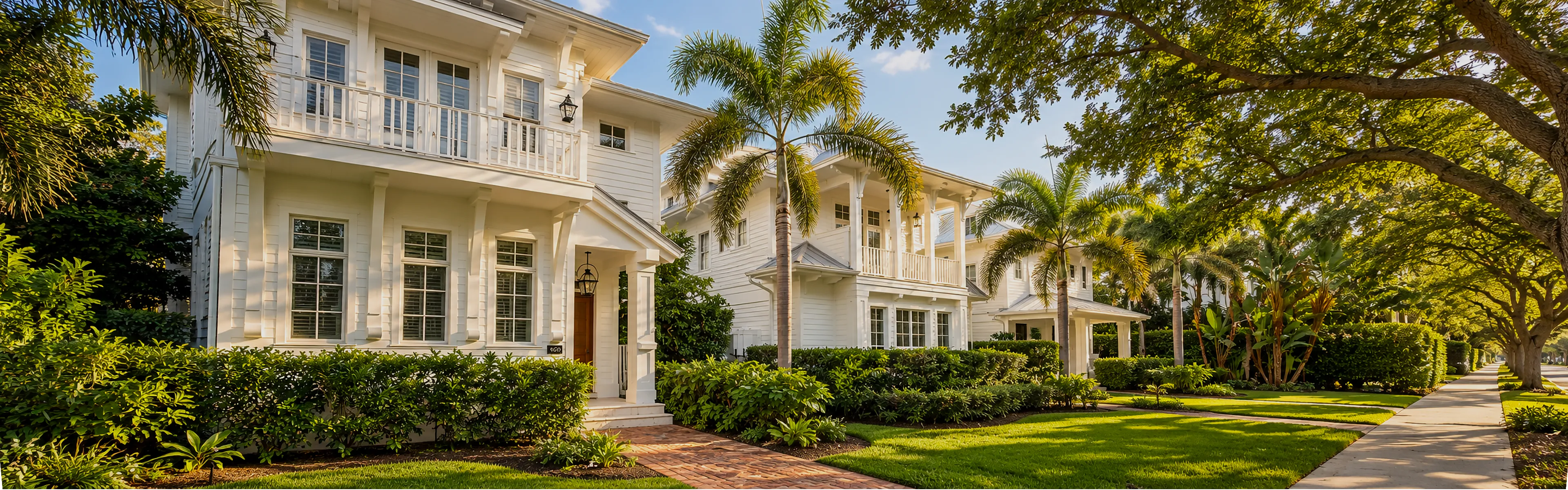
Old Naples Homes & Real Estate
Old Naples, Florida
Welcome to your local Old Naples homes for sale & real estate resource. Old Naples is the original core of Naples, Florida, running from the Gulf of Mexico east to US 41 and south from Golf Drive to 14th Avenue South, where Aqualane Shores begins. Inside it sits the Naples Historic District, listed on the National Register of Historic Places in 1987 and mapped by the City of Naples as a polygon of about 48 acres. The district contains 65 contributing historic houses built between 1887 and 1937. It is the only Naples neighborhood where you can walk from the beach to Fifth Avenue South, and the ZIP code is 34102. Listings use both spellings, and the MLS subdivision field reads OLDE NAPLES. There are no private docks here: Old Naples fronts the beach rather than a canal system.
Quick Facts
- About 48 acres, NRHP 1987 Historic District
- 65, built 1887–1937 Historic houses
- 14th Avenue South Southern limit
- 34102 ZIP code
- Yes, from most of it Walk to Fifth Avenue
- No — beach frontage only Gulf access by boat
Current Homes For Sale in Old Naples


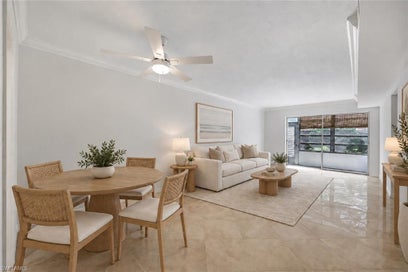


Let's go shopping in
Old Naples
Old Naples or Olde Naples — Which Is It?
Both spellings are in use and they do not always mean the same area. This is what each one refers to.
- The MLS uses OLDE NAPLES
- The subdivision field on listings in this neighborhood reads OLDE NAPLES, with the e. That is the spelling a buyer sees on a listing sheet, which is why the "olde" variant keeps its own search volume even though "old naples" is the more common phrasing in conversation. Neither is a misspelling and both appear in listing descriptions, so searching one term alone will miss inventory described with the other.
- They are not always the same area
- Some local sources use "Olde Naples" for the narrower stretch around the Naples Pier and Third Street South, and "Old Naples" for the whole historic quarter. Treat a listing description as approximate and check the address.
- Old Naples is the neighborhood
- The commonly used boundary runs from the Gulf east toward US 41 and south from about Central Avenue to 14th Avenue South. There is no legal boundary: the City of Naples defines the Historic District, not the neighborhood.
- 14th Avenue South is the southern edge
- Old Naples ends at 14th Avenue South. The neighborhood immediately south of that line is canal-built and boating-oriented, which is a different proposition entirely: docks behind the houses, no walk to Fifth Avenue South, larger lots. That is Aqualane Shores, and the two are adjacent but function very differently.
- The ZIP code is 34102
- Old Naples shares 34102 with several adjacent areas, so a ZIP search will not isolate it. Street address is the only reliable filter.
What Is the Naples Historic District?
The district is a formal National Register boundary inside the larger neighborhood. The two are not the same thing.
- Listed in 1987
- The Naples Historic District was added to the National Register of Historic Places on 17 December 1987, reference number 87002179. The listing is on the National Park Service register.
- About 48 acres, not 500
- The City of Naples publishes the district boundary through its GIS, and that polygon measures roughly 48 acres. Several secondary sources, including the Wikipedia entry for the district, give a figure of about 48 acres. We have used the City’s own mapped boundary because it is the primary source and can be checked directly. If acreage matters to a decision, verify the specific parcel with the City rather than relying on either number.
- 65 historic houses
- It contains 65 contributing historic houses, two historic commercial buildings and 26 non-contributing structures.
- Built 1887 to 1937
- The period of historic development runs from 1887 to 1937. The oldest surviving buildings are frame vernacular cottages, several of them on the beach end of Twelfth Avenue South.
- District is smaller than the neighborhood
- Most of what people call Old Naples sits outside the National Register boundary. A house can be in Old Naples and not in the Historic District, which matters for how it is described and what can be done to it.

Weighing Old Naples
Pros
- Walk to the beach, Fifth Avenue South and Third Street South from one address
- The only Naples neighborhood with a National Register historic district
- Original 1887 street grid, laid out for walking rather than driving
- No mandatory homeowners association and no gates
Cons
- No private docks — beach frontage, not canal frontage
- Lots are small by Naples standards, often under a third of an acre
- Seasonal traffic and parking pressure around Fifth Avenue South
- Most of the neighborhood sits outside the protected Historic District

Old Naples Shopping and Dining
Shopping
- Fifth Avenue South — the main restaurant and gallery strip
- Third Street South — smaller, older, with a Saturday farmers market
- Tin City on the bay side for waterfront casual
- Independent boutiques rather than national chains
Dining
- Dozens of restaurants within a few blocks of most addresses
- Courtyard dining on Third Street South
- Seasonal reservations are essential from January to April
- The Old Naples Pub and other long-standing local rooms
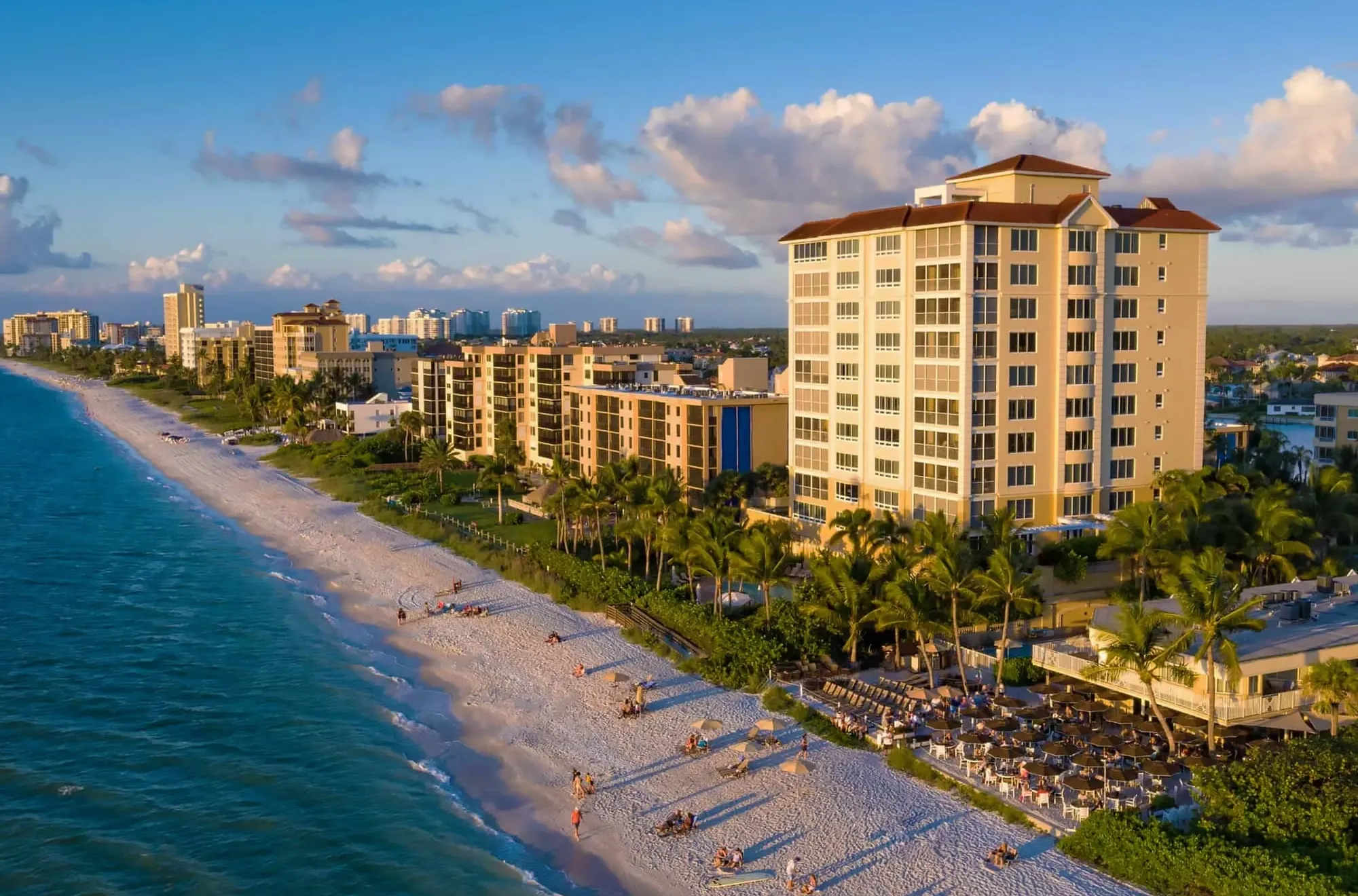
Old Naples Beaches and Lifestyle
Beach
- The Gulf runs the entire western edge of the neighborhood
- The Naples Pier sits at the foot of 12th Avenue South
- Multiple public beach accesses rather than one entry point
- Lowdermilk Park is a short distance north
Lifestyle
- Cambier Park has a theater, playgrounds and free outdoor films
- Naples Historical Society and Palm Cottage are in the neighborhood
- Walking and cycling are the normal way to get around
- Seasonal population swings substantially from January to April
What to Know Before Buying in Old Naples
Old Naples is where the city started, and it is still the only part of it where the beach, the restaurants and the shops are all within walking distance of the same front door.
That is what people are buying. The houses range from 1920s cottages to new construction on the same street, often next door to each other.
What does Old Naples cost compared with its neighbors?
Old Naples competes with the waterfront neighborhoods immediately south, and buyers usually weigh all three. The trade is walkability against water.
Old Naples puts Fifth Avenue South, Third Street South and the pier within a walk but has no private docks. Aqualane Shores and Port Royal have deepwater frontage and no shops at all.
| Old Naples | Aqualane Shores | Port Royal | |
|---|---|---|---|
| Where they differ | |||
| Waterfront type | Beach frontage | Canal | Canal and bay |
| Private dock | No | Yes | Yes |
| Walk to Fifth Avenue South | Yes, from most of it | From the north end | No |
| Typical lot | 0.15 – 0.30 acres | 0.25 – 0.35 acres | 0.5 – 1.5+ acres |
| Historic housing stock | Yes, 65 listed houses | Very little remaining | None |
| Where they match | |||
| Gated | No | No | No |
| Mandatory HOA | None | None | None |
What Does Old Naples Cost?
Old Naples is two markets in one boundary, and almost every published figure blends them. Three of every four sales here are condominiums, and they sell for a fraction of what a single-family house costs on the same streets. That is why medians from different sources disagree by a factor of seven.
The split is not evenly spread. Condominiums cluster along the numbered avenues east of Gulf Shore Boulevard, many low-rise and built in the 1960s and 1970s, while the single-family stock sits on the original platted lots nearer the beach. Which market you are shopping changes the price per square foot, the age of the building, and whether an association sets the rules.
| Single-family | Condominium | |
|---|---|---|
| Median sale price | $6,300,000 | $827,000 |
| Sales | 36 | 114 |
| Share of transactions | 24% | 76% |
| Middle half of sales | $4.62M – $7.63M | $496K – $1.70M |
| Full range | $1.89M – $12.0M | $240K – $3.80M |
| Median size | 6,970 sq ft | 1,225 sq ft |
| Median year built | 2009 | 1984 |
The single-family figure is the one most buyers mean when they ask what Old Naples costs, and at a median of $6.3 million it sits close to what the Naples Area Board of REALTORS® reports for the neighborhood. The condominium figure explains the low numbers on the national portals: a source that reports one median for all of Old Naples is averaging a 6,970 square foot house against a 1,225 square foot condominium built in 1984. The wider market is on the Naples condos for sale page.
Two details worth knowing before you read any of it as a valuation. The single-family median moved on 36 sales across eight months, so a handful of transactions shift it materially. And 86% of these parcels sit in FEMA flood zone AE, which affects insurance on both sides of the market.
What drives the price on one block versus the next?
Two houses of similar size a few hundred feet apart can differ by millions in Old Naples, and the reasons are consistent. In rough order of how much they move the number:
- Distance to the beach. Gulf-front, then beach block, then two or three blocks back. Each step is a material change, and the first two are the largest.
- Whether the value is in the lot or the house. On a period cottage the land often carries most of the value, which is why identical lots trade very differently depending on what is standing on them.
- Walk to Fifth Avenue South or Third Street South. Proximity is a premium up to a point, after which traffic and evening noise start working against it.
- New construction versus renovated. A recent remodel and a current-code rebuild are not the same asset, and the gap shows up in insurance and financing as well as price.
- Lot dimensions and orientation. Corner lots, alley access and width all change what can be built.
This is why a published median is close to useless here. Ask for closed sales on the same block and the same side of the street before anchoring on a number.
What are you actually buying in Old Naples?
Lots are small by Naples standards, typically between a sixth and a third of an acre, and the streets are laid out on the original 1887 grid rather than around a waterway. That grid is why the neighborhood works on foot and why almost every address is a few blocks from either the beach or Fifth Avenue South. Much of the current inventory is new construction on those original lots.
What can you build on an Old Naples lot?
More rebuilds happen here than anywhere else in the city center, so the building envelope matters even to buyers who think they are buying a finished house. Old Naples covers more than one zoning district, and the numbers change between them, so the envelope has to be checked parcel by parcel with the City of Naples rather than assumed from a neighbouring street.
What to establish before you write an offer:
- Zoning district for the specific parcel, since setbacks, height and lot coverage all follow from it.
- Front, side and rear setbacks, and whether the side setback steps in above a given height.
- Height limit and the datum it is measured from — in Naples that is usually the highest of the FEMA first-habitable-floor elevation, the state DEP requirement, or the crown of the road, which is not the same as measuring from grade.
- Minimum lot area and width, and whether the existing lot is conforming. Many original Old Naples lots are narrower than current minimums and are legal non-conforming.
- Alley access, where it exists, and what it allows for garage placement.
- Pool and guest-house placement within the remaining envelope.
- Whether any local historic designation applies to the parcel, which is separate from the National Register listing and is the designation that can actually restrict work.
The common and expensive mistake is assuming a house can be rebuilt exactly as it stands. A legal non-conforming structure often cannot be reproduced under current code, which changes what the lot is worth.
What does the Historic District designation mean for an owner?
National Register listing is an honorific rather than a restriction: on its own it does not prevent an owner from altering or demolishing a house. What binds is City of Naples zoning and any local historic designation that applies to the specific parcel. If a property is described as historic, confirm which designation is meant before assuming either protection or restriction.
Where is Old Naples?
Old Naples runs from the Gulf of Mexico east to US 41, and from Golf Drive south to 14th Avenue South. Below Central Avenue the eastern edge follows the Naples Bay shoreline rather than the highway, which is why the southern half of the boundary is irregular.
There is no legal boundary. The City of Naples defines a Historic District, not a neighborhood, so every source draws Old Naples slightly differently and listings vary with them. The outline shown here is Google’s.
What the line means in practice: south of 14th Avenue South is Aqualane Shores, which is canal-built with docks behind the houses. North of Golf Drive is Coquina Sands. Old Naples is the part in between, where the beach and Fifth Avenue South are both walkable from the same address.
Additional Old Naples Information
Old Naples suits a buyer who wants to leave the car at home and does not need a boat behind the house. If the boat is the point, Aqualane Shores starts one street south and Port Royal beyond it, both with bridge-free Gulf access that Old Naples cannot offer.
Inventory here divides between period houses and new construction on historic lots. Browse the wider market through Naples homes for sale, Naples condos for sale and Naples beachfront homes, or see every community in the Naples neighborhood guides. Buyers drawn to the district’s older houses can also browse Naples historic homes, and those at the top of the market Naples luxury homes. Owners weighing a sale should start with a Naples home value estimate, since a historic cottage and a teardown lot on the same street price very differently.
Who should buy in Old Naples, and who should not
Old Naples makes sense for a buyer who puts the beach and downtown within walking distance ahead of lot size and boating. If you will use the walk — morning on the sand, dinner on Third Street, no car for either — it is the only Naples neighborhood that delivers all of it from one address, and that is what holds its value.
It is the wrong choice if a dock behind the house matters more than walking to dinner. Old Naples fronts the beach, not a canal, and no amount of money buys a private dock here. We would start that search in Aqualane Shores or Port Royal instead. It is also the wrong choice for a buyer who wants an acre and a wall around it: lots are small, streets are close together, and the neighborhood is busiest in exactly the months you would be here.
For a boat behind the house rather than a walk to Fifth Avenue, Royal Harbor sits east across the bay, and Gordon Drive runs south along the sand.
The buyers who regret it are usually the ones who bought the house rather than the block. On a street where much of the value sits in the land, paying a premium for someone else’s recent remodel is the most common way to overpay.
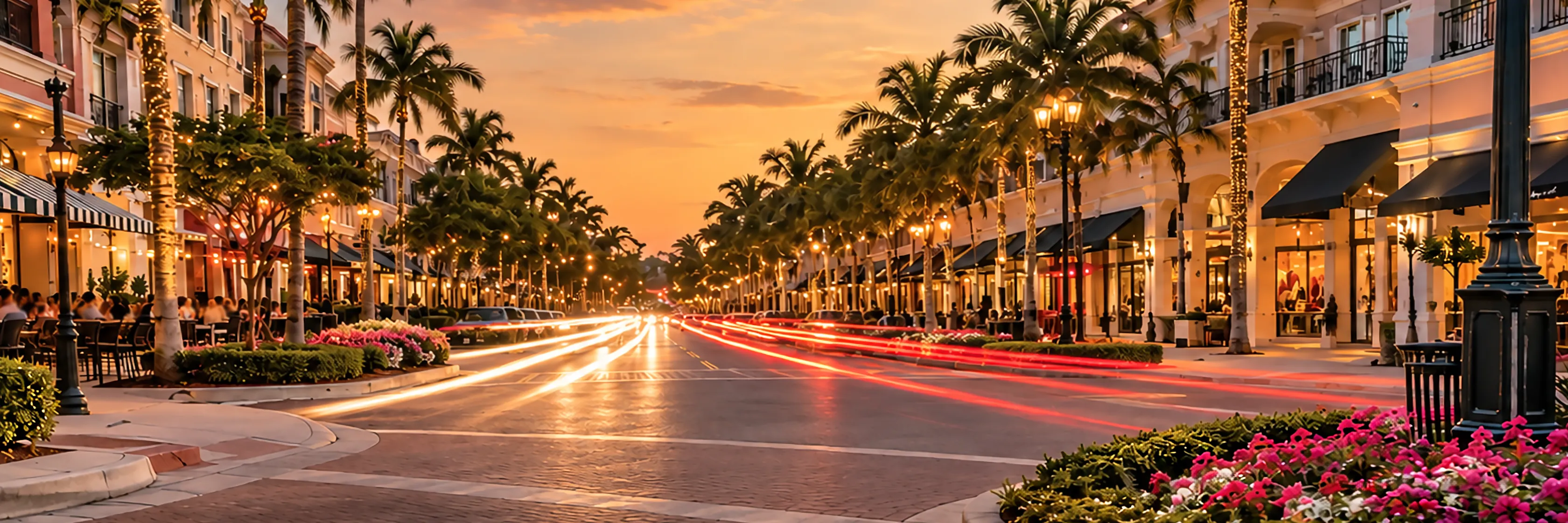
Old Naples, on Foot
Fifth Avenue, Third Street and the pier, all within a walk of the beach. We can show you cottages and new estates on the same morning.
Arrange a ConsultationOld Naples Schools
Collier County Public Schools serves Old Naples. The schools below are the assignment returned for a representative address in the neighborhood.
Assignment runs by parcel, not by neighborhood. Two houses on the same street can be zoned differently, and the district redraws boundaries from time to time. Check the specific address before relying on it.
Old Naples shares this exact assignment with Port Royal, Aqualane Shores, Coquina Sands, Gordon Drive and The Moorings. Across the southern coastal strip, schools are not what separates one neighborhood from another. St. Ann sits about half a mile away, the closest private school to any neighborhood on this site.
Private school distances are straight-line approximations from the neighborhood, offered for orientation rather than as a recommendation.
The district states that its maps provide general information and that accuracy is not guaranteed, nor should a result be taken as a guarantee of placement. Look up any address on the CCPS attendance zone locator, or call the Department of Student Assignment on (239) 377-0540.
| Elementary | Lake Park Elementary |
|---|---|
| Middle | Gulfview Middle |
| High | Naples High |
| District | Collier County Public Schools |
| Nearby private schools | |
| Nearest | St. Ann Catholic School (~0.5 mi) |
| Also nearby | Seacrest Country Day School (~7.5 mi) |
Old Naples FAQs
Where is Old Naples?
Old Naples occupies the south-west corner of the City of Naples, between the Gulf of Mexico and US 41, running south from about Central Avenue to 14th Avenue South. The Naples Pier sits at the foot of 12th Avenue South, near its center. Fifth Avenue South and Third Street South run through it, and the ZIP code is 34102.
What is the difference between Old Naples and Olde Naples?
Very little, and the two are used interchangeably in most listings. Some local sources reserve "Olde Naples" for the narrower area around the Naples Pier and Third Street South, while "Old Naples" covers the whole historic quarter. Because both spellings appear in listing data, searching one term alone will miss inventory described with the other.
How old is Old Naples?
The Naples Company began developing the area in 1887, and the Naples Historic District recognises a period of historic development running from 1887 to 1937. Naples itself was not incorporated as a city until 1949, so the neighborhood is more than sixty years older than the city that surrounds it.
Is Old Naples the same as the Naples Historic District?
No, and the distinction matters when you buy. The Historic District is a National Register boundary that the City maps at about 48 acres listed in 1987, running between Ninth Avenue South, Third Street, Thirteenth Avenue South and the Gulf. Old Naples as people use the term is considerably larger, so a house can sit in Old Naples and outside the district. The district record is public at the National Park Service.
Can you keep a boat in Old Naples?
Not at the house. Old Naples fronts the beach rather than a canal system, so there are no private docks in the neighborhood proper. Buyers who want a boat behind the house look to Aqualane Shores or Port Royal immediately south, or to the wider set of Naples Gulf access homes.
Is Old Naples walkable?
Yes, and it is the main reason people buy there. Most of the neighborhood is within a few blocks of Fifth Avenue South or Third Street South, and the beach runs its whole western edge. It is the only Naples neighborhood where the beach, the restaurants and the shops are all reachable on foot from a single address.
Naples Neighborhoods
- Aqualane Shores
- Audubon Country Club
- Barefoot Beach
- Bay Colony
- Bonita Bay
- Caymas
- Collier’s Reserve
- Coquina Sands
- Enclave of Distinction
- Fiddler’s Creek
- Gordon Drive
- Grey Oaks
- Gulf Shore Blvd
- Isles of Collier Preserve
- Kalea Bay
- Kensington
- Livingston Woods
- Marco Island
- Mediterra
- Naples Beach Club
- Naples Cay
- Oakes Estates
- Olde Cypress
- Park Shore
- Pelican Bay
- Pelican Marsh
- Pine Ridge Estates
- Port Royal
- Quail Creek
- Quail West
- Royal Harbor
- Seagate
- Talis Park
- The Dunes
- The Moorings
- Tiburón
- Twin Eagles
- Vanderbilt Beach
- Vineyards
- Windstar on Naples Bay
- Wyndemere
Considering Old Naples?
Whether a house sits inside the Historic District, and whether it is a restoration or a teardown, changes the number more than the square footage does. We can confirm the detail for a specific address before you write an offer.
Speak With Our Team